Do your kids a big favor: get rid of some of your stuff. Even better, get rid of a lot of stuff.
It’s a tough reality check for many Baby Boomers, but adult children often view your lifetime collections as physical and emotional clutter. Millennials and younger generations increasingly prioritize minimalism and experiences over “stuff,” meaning your heirs are highly likely to pass on inheriting your prized collections.
Many live in smaller homes or apartments, and they tend to move more frequently for work. Much of what previous generations carefully saved simply doesn’t fit into their lives.
Your kids may appreciate the affection you have for the fine china that you bought when you got married, or the figurines you’ve spent decades collecting, but they may have no desire, or space, to keep them.
The result is a painful mismatch between expectations and reality.
The Hidden Burden of Inheritance
When parents postpone dealing with decades of accumulated belongings, the responsibility almost always falls to their children.
That task arrives during one of life’s most emotionally difficult periods, immediately after the death of a parent or during a move into assisted living.
Instead of grieving or providing care, adult children often find themselves spending weeks or even months cleaning out homes packed with possessions.
Every object requires a decision: keep, sell, donate, recycle, or throw away? Multiply those choices by thousands of items, and it’s emotionally exhausting.
At some point, someone will have to make these decisions. It might as well be you.
It isn’t easy to do, but view it as an act of love. Just as you should get your financial house in order, it’s also important to get your physical house in order.
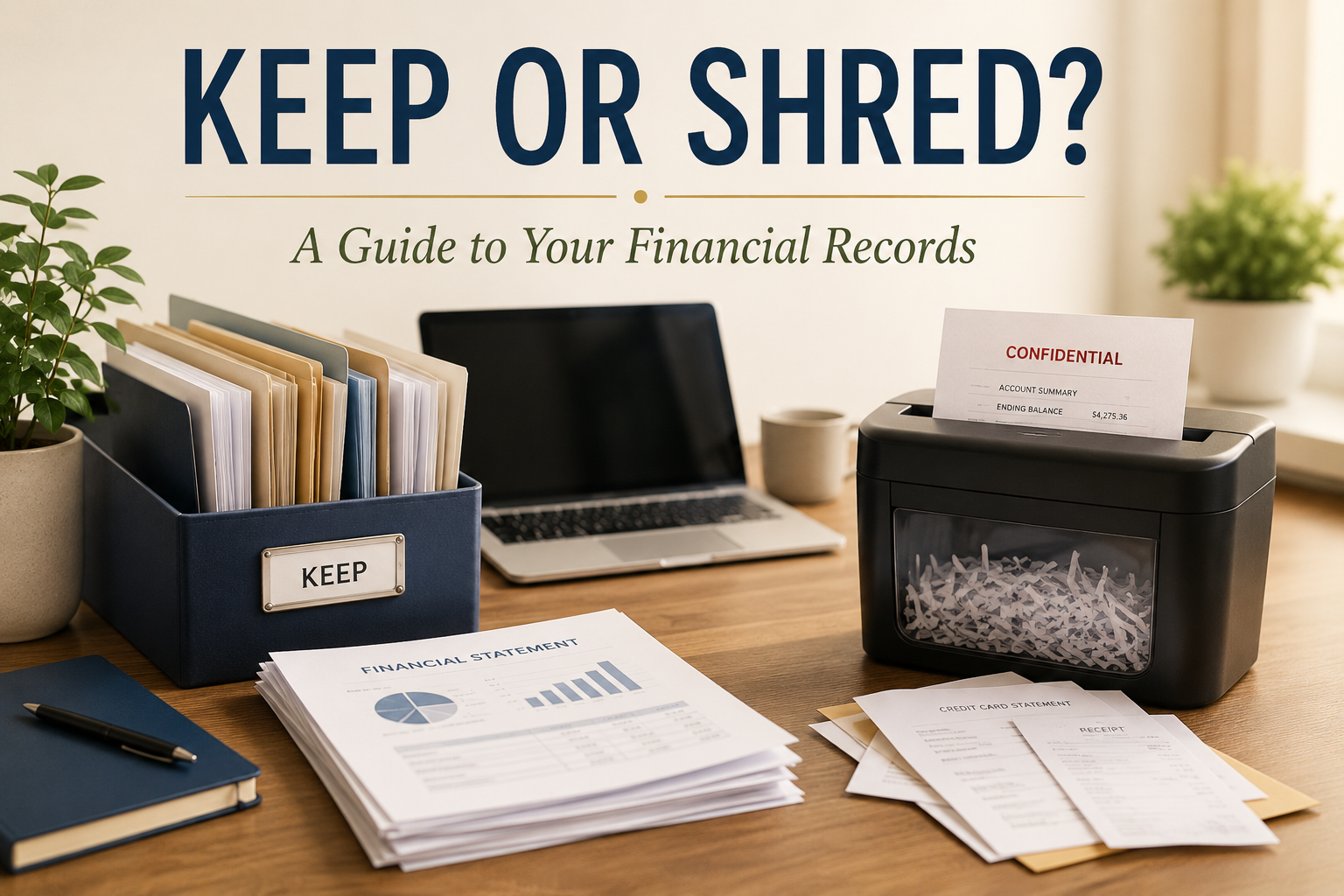
The same thinking applies to financial paperwork. Old tax returns, bank and investment statements, insurance documents, and other records can accumulate just as easily as household belongings. Take some time to decide what to keep and securely shred what no longer serves a purpose. Doing that now means your children won’t someday be left trying to decide what is important and what can safely be discarded.
Not sure what financial records you should keep? Read our updated record retention guide to learn what to save and what to shred.
Many baby boomers inherited ideas from their Depression-era parents that stuff was meant to be passed down from generation to generation.
But we’ll say it again: your kids don’t want your stuff.
And that may include your biggest possession of all – your home and even the family vacation home down the shore.
You won’t know for sure until you ask them. You may have to work up some courage to have these conversations, but it’s worth it for everyone involved.
You may be surprised by how they feel about the big stuff and the little things. The house may be too big and too expensive to maintain, the furniture doesn’t fit their lifestyle, but they have always loved that painting in the living room. You don’t know until you ask.
Where to Start?
Decluttering your home isn’t something you can do in one or two weekends. Take it slowly and methodically. Start with areas that are not laden with too much emotional attachment, such as the junk drawer/closet or the kitchen.
Make a pile or list of things you want or need to keep, and a pile of things to get rid of. Professionals say you should avoid a TBD (to be decided later) pile.
The ‘get rid of’ pile should include things that you have not used (a nut-cracker?) or worn in the past two years. Dump that pile of cables and chargers that don’t fit anything.
Digitize boxes of family photos, then toss them (or recycle them).
Sell, Donate, Trash
Some items may have enough monetary value that you can research selling them. Sterling silver flatware or a large baseball card collection might bring in anywhere from a few hundred to tens of thousands of dollars.
But many objects will have little or no monetary value or use. Don’t waste your time trying to salvage them. Donate them to Goodwill, your house of worship, or some other local organization that can find a good home for them. Otherwise, toss them out.
Not surprisingly, there are now professionals that you can hire to help you sort through the process. Estate planners and professional organizers know how and what can be sold, and they can help you get rid of the other stuff.
One thing that many pros agree on: avoid paying for temporary storage for items that you’re not sure about. It can be expensive, and often, it’s not so temporary. It can end up costing more to store some items than they are worth. You know the saying: out of sight, out of mind.
The bottom line is that items you consider priceless might become a burden for your heirs. Pass along the stories, not the physical items. Resist the temptation to think: “Maybe my grandchildren will want this.”
Still not sure where to start? Give us a call, and we’ll talk you through it.