As the Medicare Open Enrollment Period draws closer, we want to make you aware of a relatively new phishing scam targeting seniors.
Health systems across the country are warning patients about fraudulent emails and text messages offering a free “MyChart Medicare Kit” or “Senior Health Package.” The messages appear to be connected to MyChart, a healthcare provider, or Medicare. But they are not.
The goal is to get recipients to click a malicious link or provide personal information, potentially including their Medicare number or other sensitive information.
How the “Medicare Kit” Scam Works
According to Becker’s Healthcare, at least 40 health systems have warned patients about the scam (and the number is rising). Some messages use subject lines such as “Your MyChart Medicare Kit Awaits!” and promote free senior wellness packages or other benefits. The messages are not being sent by MyChart or the health systems they appear to represent.
The scam is particularly convincing because many patients are accustomed to receiving legitimate emails and notifications connected to MyChart and their healthcare providers. A message that combines a familiar healthcare name with an offer related to Medicare can easily appear trustworthy at first glance.
As I was preparing this article, the very scam email we’re warning about showed up in my own inbox! Here’s what it looked like:
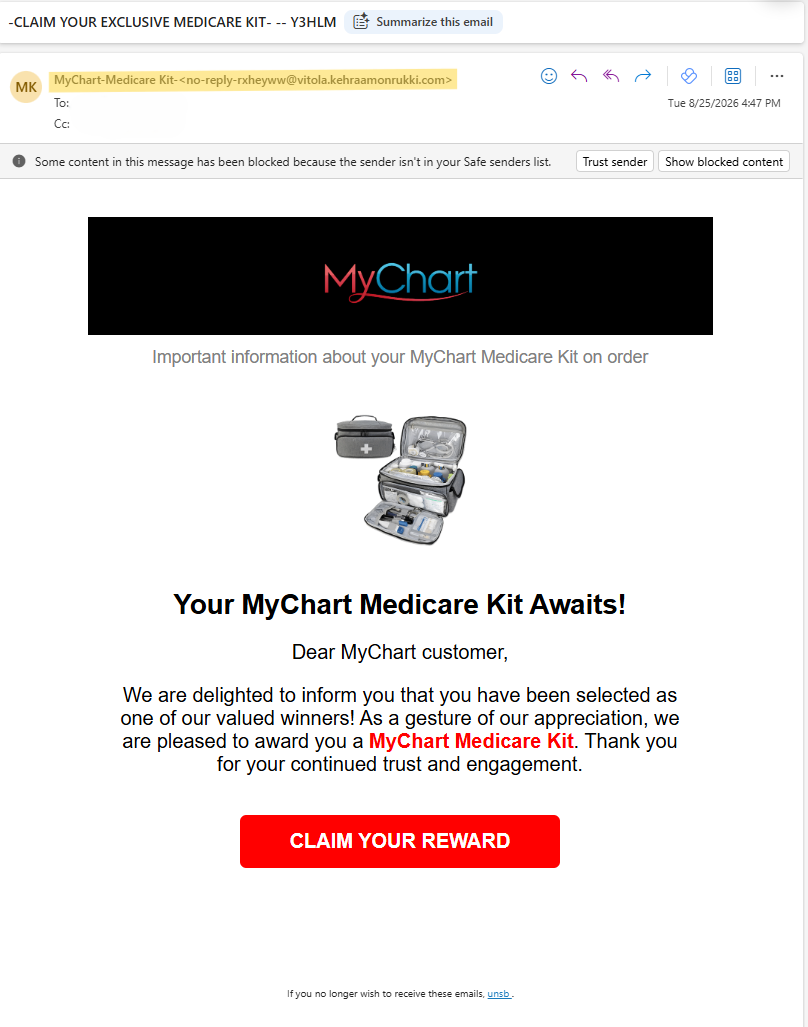
At first glance, the email looks surprisingly legitimate, complete with the MyChart logo and professional-looking graphics. But look more closely at the sender’s email address. Despite the “MyChart-Medicare Kit” display name, the actual address has no connection to MyChart. The unexpected prize language and “Claim Your Reward” button are additional red flags.
The lesson: Don’t rely on the name or logo you see in an email. Check the actual sender address before clicking a link, especially when a message contains an unexpected offer or asks you to take immediate action.
MyChart has indicated that the scam does not represent a security issue with the MyChart platform. Rather, scammers are taking advantage of the familiarity and credibility of the MyChart brand.
Medicare Scams Aren’t Limited to MyChart
While this particular scam is new, the tactics behind it are not.
The Federal Trade Commission warns that scammers frequently impersonate Medicare or organizations connected to Medicare, particularly as Open Enrollment approaches. They may claim that you need a new Medicare card, ask you to verify your Medicare number, or offer free medical equipment or supplies.
Medicare offers a simple rule to remember: Protect your Medicare number the same way you would protect a credit card number.
What Should You Do If You Receive One of These Messages?
If you receive an unexpected Medicare or MyChart-related email or text:
- Don’t click links or open attachments. Verify the message independently instead. If it appears to come from MyChart, your doctor, hospital, insurer, or Medicare, use an app, website, or phone number you already know is legitimate rather than the contact information provided in the message.
- Be skeptical of unsolicited offers for free products or services. An unexpected “free” Medicare kit, medical equipment, wellness package, or similar offer should raise a red flag.
- Don’t provide your Medicare number or financial information. Medicare will never unexpectedly call, email, text, or contact you on social media to ask for your Medicare, Social Security, or bank account number.
- Review your Medicare claims. Medicare recommends regularly checking your Medicare statements or secure Medicare account for services or supplies you don’t recognize.
If You Think You’ve Been Targeted
Receiving a suspicious message doesn’t necessarily mean your information has been compromised. Delete the message if you haven’t interacted with it.
If you provided your Medicare number, notice an unfamiliar claim, or believe someone may be using your information, contact Medicare at 1-800-MEDICARE (1-800-633-4227). Medicare also recommends reporting suspected fraud and reviewing your claims for services or supplies you didn’t receive.
Medicare Open Enrollment runs from October 15 through December 7 each year, a period when Medicare-related communications become more common and fraudulent messages may be harder to spot. Scammers count on that confusion, so a little extra skepticism can go a long way.
If something doesn’t look right or you’re unsure whether a message is legitimate, reach out before taking action. We’re always happy to help.